Listeners:
Top listeners:
-
 play_arrow
The Canadianist Radio Listen. Watch. Read. Discuss. We're in the middle of everything.
-
 play_arrow
Canadianism Podcast | S2 E7 | Quebec Is About to Show Canada What’s Wrong With Our Voting System
SUBSCRIBE NOW TO OUR MAILING LIST

Canada’s Song of the Summer Is 10 Years Old. What the Hell Is Going On With Music?
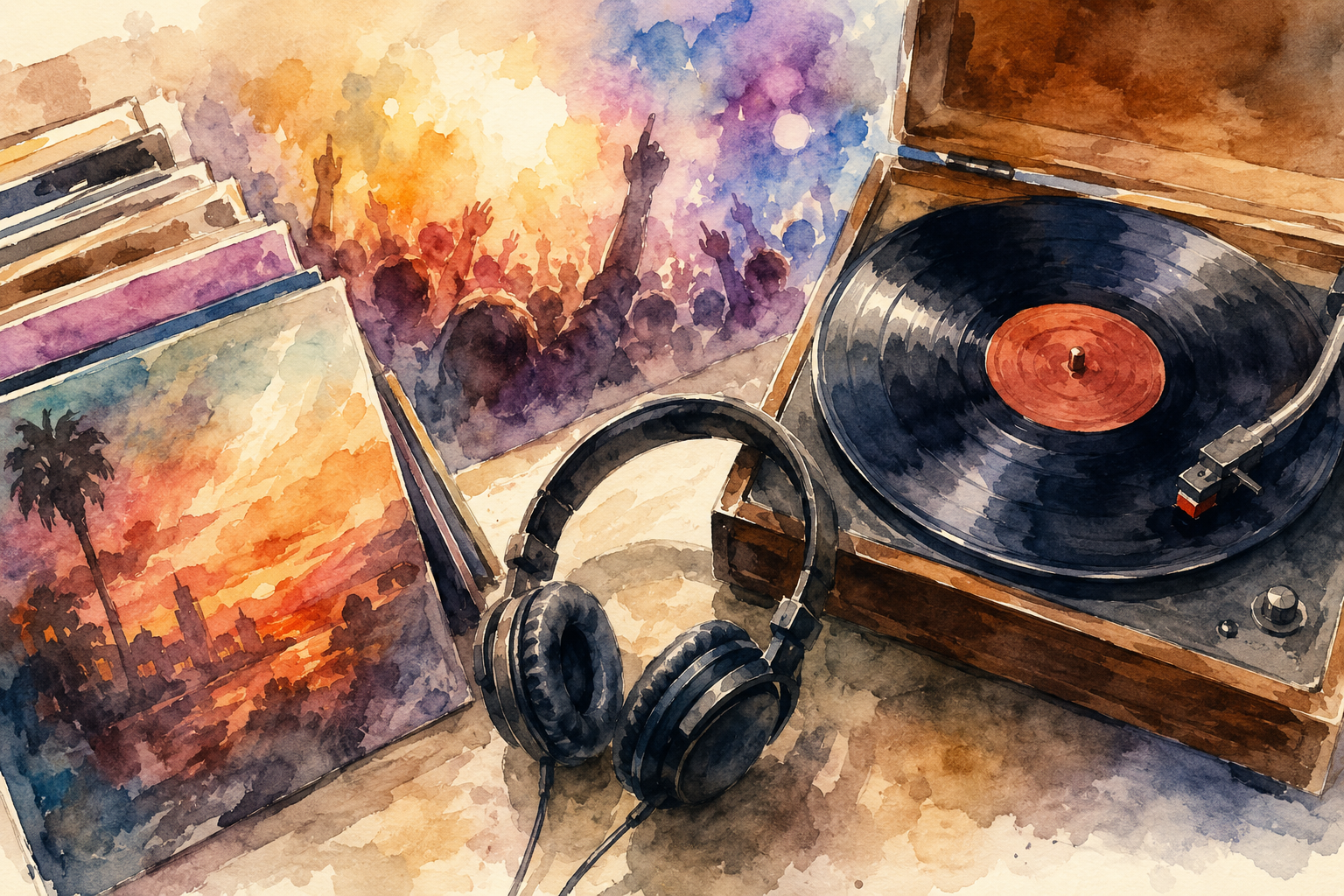
Canada’s Song of the Summer Is 10 Years Old. What the Hell Is Going On With Music?
Apparently, one of the biggest songs of summer 2026 in Canada needed a decade to get here.
TikTok has named Mac Miller’s “Cinderella,” featuring Ty Dolla $ign, its No. 1 Song of the Summer in Canada. There is just one small detail: the song came out in 2016.
Ten years ago.
“Cinderella” appeared on Miller’s The Divine Feminine, and this summer it suddenly found itself back in the middle of popular culture, fuelled by millions of TikTok posts, romantic edits and a wave of 2016 nostalgia. By late June, Billboard Canada reported the song had already been used in more than 13 million TikTok posts. It also returned to the actual charts, reaching No. 29 on the Billboard Canadian Hot 100.
That alone is interesting.
Then you look at what happened internationally.
TikTok’s global Song of the Summer wasn’t some brand-new release either.
It was Katy Perry’s “The One That Got Away.”
Released in 2011.
Fifteen years ago.
At some point, you have to ask the obvious question:
What the hell is going on with music?
Old Music Isn’t Old Anymore
For most of the history of popular music, songs had a fairly predictable life.
A record came out. Radio played it. People bought it. It climbed the charts, peaked, declined and eventually became an oldie.
There were exceptions, obviously. Movies could revive a song. An artist could die and suddenly return to the charts. A cover version might introduce an older track to another generation.
Those were exceptions.
Streaming and social media appear to be turning the exception into normal behaviour.
A 16-year-old scrolling TikTok does not necessarily experience “Cinderella” as a song from 2016.
It is simply the song playing right now.
The same thing can happen with Fleetwood Mac, Kate Bush, Lenny Kravitz, ABBA, Metallica or a song somebody’s parents played in the car 20 years ago.
The release date has become increasingly irrelevant.
If the algorithm puts it in front of you today, it is new to you today.
TikTok Has Basically Invented the Musical Time Machine
This summer offers a particularly good example.
TikTok itself described 2026 as a mixture of emerging artists, new releases and rediscovered catalogue songs. “Cinderella” became Canada’s No. 1 song on its summer list while Perry’s “The One That Got Away” topped the global ranking.
Lenny Kravitz got into the act too.
His 1991 hit “It Ain’t Over ’Til It’s Over” reached No. 3 on TikTok’s U.S. summer list after finding a new audience through television clips, relationship posts and other videos.
That song is 35 years old.
Imagine explaining that to the record industry in 1991.
“Congratulations, Lenny. Big hit. See you again in 35 years when teenagers start using it behind videos of their dogs.”
Nostalgia Isn’t Just for People Who Were There
This might be the strangest part.
Traditionally, nostalgia meant remembering something you experienced.
Now people can apparently become nostalgic for eras they never lived through.
Teenagers wear Nirvana shirts.
Twenty-year-olds buy vinyl.
Thirty-year-olds suddenly miss 2006.
Everyone seems convinced some previous decade had better clothes, better movies, better cars, better music and considerably fewer problems.
Social media has made cultural history permanently accessible.
Instead of one generation replacing another, they increasingly pile on top of each other.
A new artist released yesterday is competing not only with this week’s releases but with essentially the entire recorded history of popular music.
That is a hell of a catalogue to beat.
Maybe We Aren’t Running Out of Good New Music
The easy conclusion would be that modern music is terrible and everybody is retreating to the past.
People have been making that argument since approximately five minutes after the invention of music.
Every generation eventually decides the music from its youth was better.
The current situation looks more complicated.
TikTok Canada’s summer list included plenty of contemporary artists and recent releases alongside Miller. Drake landed two songs in the Canadian top 10, while Malcolm Todd, Noah Kahan and several emerging artists also appeared.
New music clearly isn’t dead.
It just lost its monopoly on being current.
That is a much bigger change.
The Record Store Used to Tell You What Year It Was
Think about how music once reached us.
New releases were physically separated from catalogue albums.
Radio had current stations and oldies stations.
Music television rotated the newest videos.
Record stores had new-release walls.
Charts overwhelmingly measured what people were buying right now.
There was a cultural conveyor belt.
New music entered at one end.
Old music eventually fell off the other.
Spotify, YouTube and TikTok blew up the conveyor belt.
Now a song from 1977 can sit beside one from 2026 without either one carrying a giant date stamp.
Shuffle does not care.
Your playlist does not care.
The algorithm definitely does not care.
This Might Actually Be Great for Music
There is another way to look at all of this.
For decades, enormous amounts of great music effectively disappeared from mainstream culture once radio stopped playing it.
Not anymore.
A kid can discover Stevie Wonder, Rush, Joni Mitchell, Prince or The Tragically Hip without needing a knowledgeable older sibling, a record collector or a particularly adventurous radio station.
Entire catalogues are sitting there waiting.
One viral clip can suddenly send millions of people looking for a song recorded before they were born.
That is an extraordinary thing.
Music no longer expires.
There Is One Problem
If every song ever recorded can become a hit again at any moment, breaking a genuinely new artist becomes harder.
A new singer is not merely competing against 50 other new singles.
They are competing against Michael Jackson.
And Queen.
And Fleetwood Mac.
And Nirvana.
And 70 years of recorded pop music sitting inside everybody’s phone.
Good luck.
That could partly explain why modern pop culture sometimes feels less defined by enormous universal hits.
There are still gigantic songs.
There are still stars.
There are still cultural moments.
The audience, however, is increasingly scattered across decades as well as genres.
Your neighbour might be listening to a record released Friday.
Your kid might be obsessed with something from 1997.
You might suddenly hear a song from 1983 and wonder why you ever stopped listening to it.
Everybody is living in a different musical year.
Maybe That’s the New Normal
Mac Miller died in 2018.
Yet eight years later, a song he recorded a decade ago has become the soundtrack to another Canadian summer.
There is something rather wonderful about that.
Artists once had a window.
Now their music can disappear, sleep for five years, ten years or thirty years, and suddenly wake up again because millions of people collectively decide:
Wait. This is really good.
Maybe the real story of summer 2026 isn’t that an old song beat the new songs.
Maybe music finally stopped being old.
So here’s the question: what song from your past deserves to become a hit all over again?
Not necessarily your favourite song.
Pick one that younger listeners should discover.
Drop the song and artist in the comments.
Let’s see which decade wins.






Post comments (0)