Listeners:
Top listeners:
-
 play_arrow
The Canadianist Radio Listen. Watch. Read. Discuss. We're in the middle of everything.
-
 play_arrow
Canadianism Podcast | S2 E7 | Quebec Is About to Show Canada What’s Wrong With Our Voting System
SUBSCRIBE NOW TO OUR MAILING LIST

Prince Edward County Just Made a Best-Places-in-the-World List. Here’s Why That Doesn’t Surprise Anyone Who’s Been.
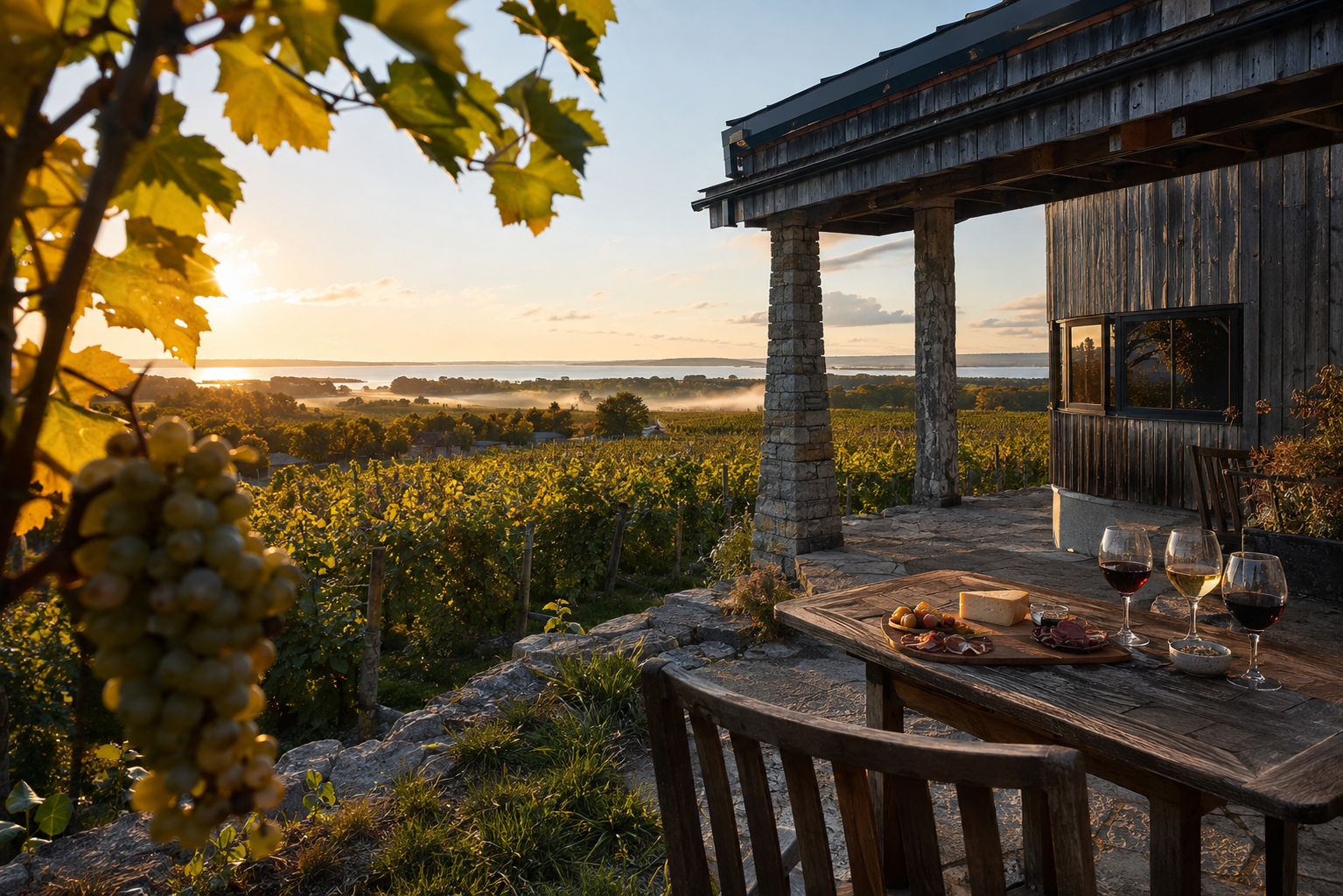
Two and a half hours from Toronto, a former farming county has quietly turned itself into the wine and food destination the rest of the world just noticed.
There’s a particular kind of Ontario smugness that comes from being into Prince Edward County before Condé Nast was. For years it was the place your one friend with good taste in wine kept talking about, the weekend trip you filed away and never quite booked, the region that sounded like it belonged in France but was actually a couple of hours past Belleville. Now CN Traveler has named it one of the world’s best spots to visit in 2026, and it’s sitting on a list next to Brussels and Victoria Falls. For a county that spent most of its modern history known mainly for canning tomatoes, that’s a hell of a turn. Narcity
The thing is, none of this happened overnight, and none of it happened by accident. Prince Edward County has been an officially designated wine region since 2007, which in wine years is basically infancy. Napa has been at this since the 1800s. Niagara had a head start of decades. PEC is the upstart, the region that showed up late to the party and started winning arguments anyway. Its secret is limestone. The bedrock under all those rolling fields is the kind of mineral-rich, cool-climate terroir that winemakers compare to Burgundy, and while I’d normally roll my eyes at a comparison like that, enough serious people keep making it that it’s stopped sounding like marketing. Pecwines
Why the county tastes the way it does
You can taste the limestone, or at least you can taste what it does. The Chardonnays and Pinot Noirs coming out of the County have a minerality and restraint that you don’t get from warmer regions, where the sun does most of the talking. Here the growing season is short and the vines have to work for it, and the wine tends to reflect that: leaner, more precise, less interested in showing off. It’s the kind of wine that rewards a second glass more than a first impression.
The wineries themselves range from the polished to the properly rustic, and that range is part of the appeal. Sandbanks Estate Winery, Karlo Estates, TerraCello, and Closson Chase all draw a crowd, each with its own personality, from the big lakeside patio energy to the smaller, quieter tasting rooms where you might end up talking to the person who actually made the wine you’re drinking. That’s still possible in the County in a way it isn’t in a lot of established wine regions, and it’s worth taking advantage of while it lasts, because a region doesn’t stay a well-kept secret forever, and this one clearly isn’t anymore. Narcity
The food caught up to the wine, and then passed it
Wine tourism has a way of dragging good food along behind it, and that’s exactly what happened here. The restaurant scene in PEC has gone from “decent enough for a wine town” to genuinely worth the drive on its own merits. Places like Darlings, Stella’s Eatery, and La Condesa are now being talked about as tables that rival what you’d find in a major city, and farm-to-table dining rooms such as Hinterland and By Chadsey’s Inlet have built menus around the county’s own Pinot Noir and Chardonnay, leaning into the same limestone-driven character that defines the wine. There’s something satisfying about a meal where the vegetables came from down the road and the wine in your glass came from the field next to it. It’s not a gimmick when the food is actually that good, and increasingly, it is. NarcityWinetravelguides
None of this happened in isolation. The County sits close enough to Lake Ontario’s fruit belt and enough small farms and artisan producers have set up shop that a serious kitchen has real ingredients to work with, not just a concept to lean on. That’s the difference between farm-to-table as a marketing phrase and farm-to-table as an actual supply chain, and PEC has quietly built the second one.
A destination built for the shoulder seasons, not just the long weekend
What makes the County smart as a travel choice, and not just a pretty one, is that it doesn’t collapse the moment summer ends. There are beaches at Sandbanks Provincial Park that genuinely rival anything on Lake Huron, and July weekends there get busy in the way any good beach does. But the wineries and restaurants have built a calendar around the whole year, not just the season when the sand is warm. Taste! Prince Edward County, the region’s flagship food and wine festival, runs in September, timed to harvest, with winery open houses and chef collaborations that turn the whole county into one long tasting menu for a weekend. Winter brings a quieter, cozier version of the same thing: fewer crowds, better rates, and tasting rooms where you can actually hear yourself think. Winetravelguides
That’s part of why tourism operators across the County are reporting stronger bookings and rising demand heading into the 2026 season, with Ontario travelers increasingly choosing regional trips over pricier international ones. Say what you want about the state of the dollar and the cost of flying anywhere these days, but there’s an upside to it: more Canadians are discovering that some of the best travel they can do is a couple of hours down the 401, not a flight away. Travel And Tour World
It’s still a small county, and that’s the appeal
Here’s the part worth remembering before the crowds catch up to the reputation. Prince Edward County is, geographically, small. It’s a handful of villages, a network of country roads, and a coastline that doesn’t take long to drive. That’s exactly what makes a weekend there feel unhurried in a way most destinations don’t manage. You’re not fighting traffic between attractions. You’re driving past cornfields and vineyards, stopping when something looks interesting, and ending up at a table you didn’t plan for because someone in a tasting room mentioned it offhand.
Global recognition tends to change places, and not always for the better. Best-of lists bring bigger crowds, higher prices, and eventually a version of the destination that’s been smoothed out for volume. PEC isn’t there yet. It’s at the sweet spot where the wine and the food have genuinely earned the attention, the villages still feel like villages, and you can still show up at a small producer on a Tuesday afternoon and have the place mostly to yourself. That won’t last forever. Which is really just another way of saying: go now, and don’t wait for the version of this story where everyone else already has.

Top popular






Post comments (0)