

Listeners:
Top listeners:
00:00
00:00
volume_up
chevron_left
-
 play_arrow
The Canadianist Radio Listen. Watch. Read. Discuss. We're in the middle of everything.
-
 play_arrow
Canadianism Podcast | S2 E7 | Quebec Is About to Show Canada What’s Wrong With Our Voting System
SUBSCRIBE NOW TO OUR MAILING LIST
Canadian Summers Don’t Feel Like They Used To, and Your Body Knows It
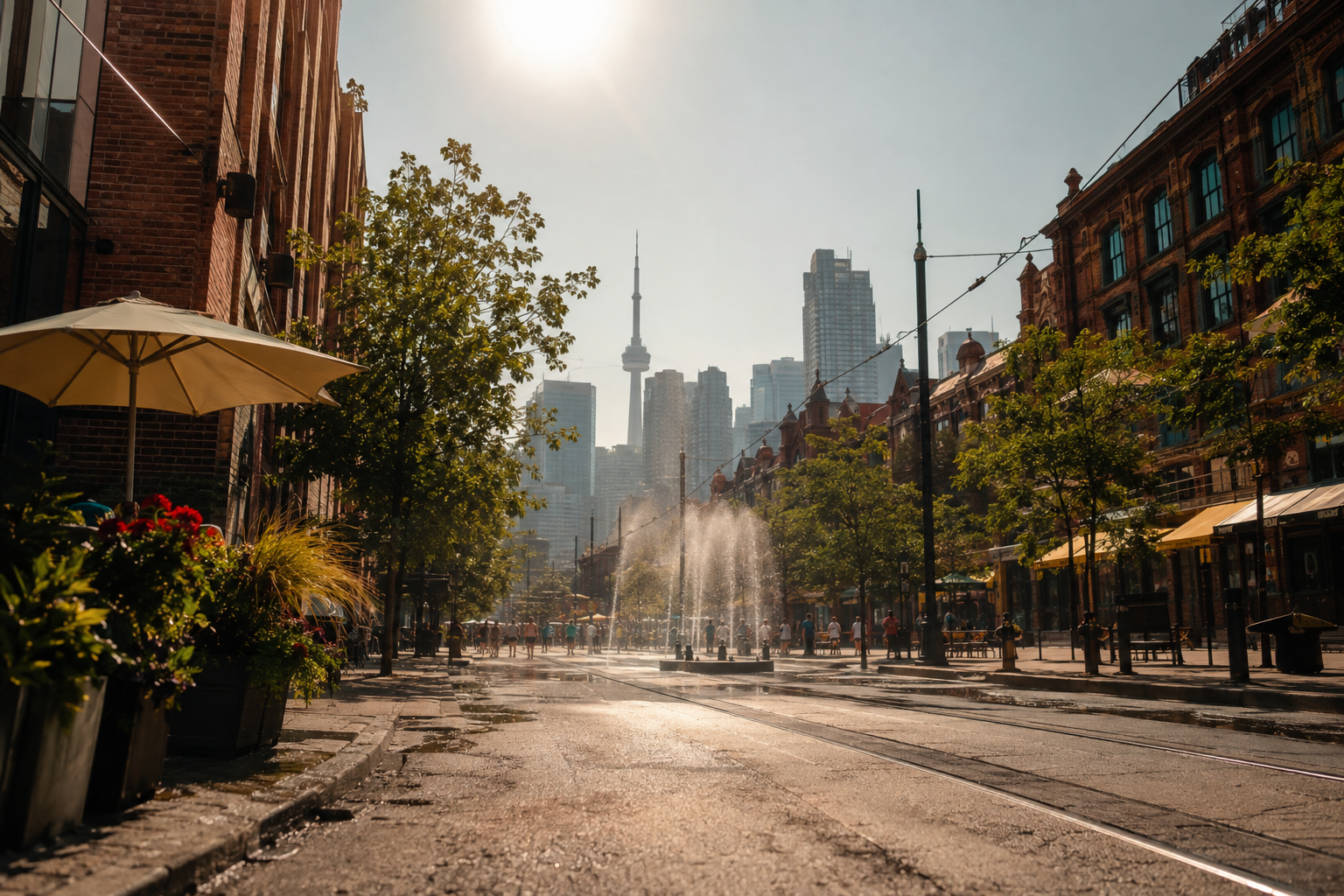
After yet another string of heat warnings this summer, Canadians are quietly rewriting the rules for how to actually get through July and August.
There was a stretch this summer when it felt like Environment Canada couldn’t keep the warning maps updated fast enough. Orange one week, yellow the next, humidex numbers that made a Toronto sidewalk feel like a sauna with traffic. In mid-July, four provinces from southeastern Saskatchewan to western Quebec were sitting under heat warnings at the same time, with temperatures that felt closer to mid-40s once you factored in the humidity. If it felt like this kept happening all summer, that’s because it did. Toronto alone has racked up warning after warning, with one stretch in early August marking the city’s sixth heat warning of the year. CBC Newsglobalnews
Canadians have always had a certain pride in weather endurance, mostly built around winter. We know how to layer, how to scrape a windshield in the dark, how to talk about wind chill like it’s a personality trait. What we’re less practiced at, historically, is summer heat that actually threatens people. That’s changing fast, and the culture hasn’t fully caught up yet.
This isn’t the same heat your parents dealt with
It’s tempting to write this off as just another hot summer, the kind every generation claims to remember worse. But the pattern underneath it is different, and it’s not really up for debate anymore. Ryan Ness, director of adaptation with the Canadian Climate Institute, has pointed out that Canada is warming at roughly twice the global average because of where it sits on the map, which means the heat waves showing up elsewhere in the world tend to hit here harder and more often. That’s not a talking point, it’s a geography problem, and it means the summer routines a lot of us grew up with, the ones built around the assumption that a truly brutal heat day was rare, Global News





Post comments (0)